
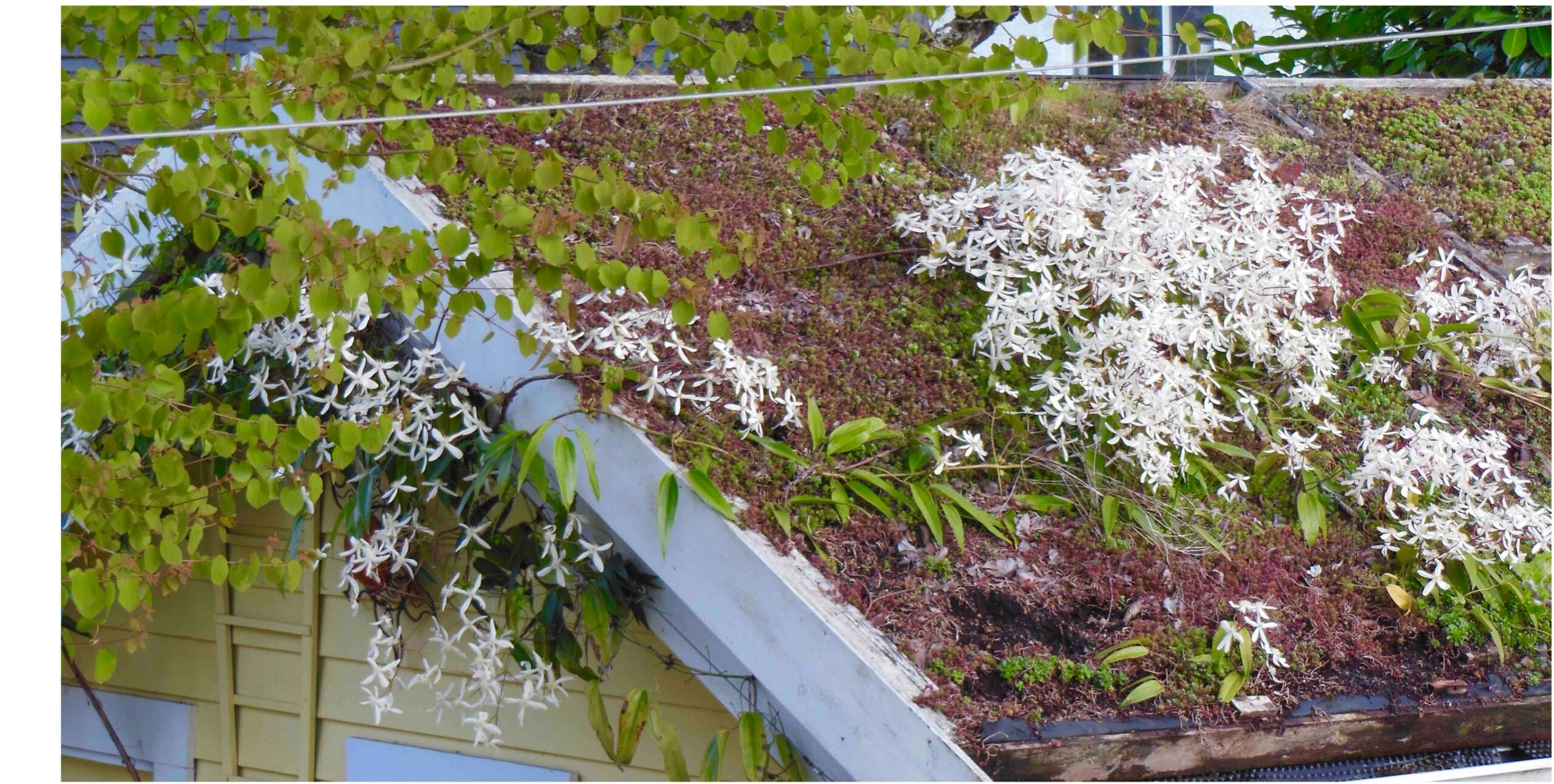
After 22 years, Randy Sharp’s green roof garage is a beautiful, low-maintenance validation of vision. This guest post will appeal to anyone, and especially to DIY creatives and to participants of our July 22 tour.
Editor’s note: We’re pleased to share this essay by award-winning landscape architect and founding board member, Randy Sharp. All content is credited to Randy. If you’d like to build a small green roof, please get in touch and we’ll help as best we can. (Also, FYI, we just launched our Educational programming, which offers training and education to all ages and professions.) Enjoy the post and please leave a comment below!
Green Roof Garage: BC Prototype
At the start of the new Millennium, before the availability of proprietary green roof build-up packages, we improvised by reaching out to local suppliers and contactors. Prototypes served as mock-ups. The green roof on my garage is an example of an enduring prototype, and proof of concept.
It all started in 1998, when I experienced an epiphany. I was at the annual convention of the American Society of Landscape Architects in Portland, OR. Tom Lipton, Manager of the City of Portland Water Quality Laboratory, introduced a series of green roof prototypes, for both inaccessible and accessible roofs. Tom demonstrated that buildings can be waterproofed and covered with vegetation, both on roofs and facades, and supported by engineered building envelope systems. My practice, Sharp & Diamond Landscape Architecture, would never be the same again.
Launched into leadership on living architecture
Back in Vancouver, this interest would eventually boost Sharp & Diamond Landscape Architecture into a position of design leadership for living architecture in BC. In 1999, we were retained to collaborate with Johnson Davidson Architecture, BCBC (BC Buildings Corp.) and the District of Sechelt. Our mandate: to research and learn from well-established extensive green roofs and their building envelope systems for high performance green buildings.
Our first modern green roof commissioned in BC was the Sechelt RCMP and Justice Facility (to be planted in 2002). The green roof would be visible from the offices of the courthouse above and the jail directly beneath. We had to get it right the first time or risk being locked-up!
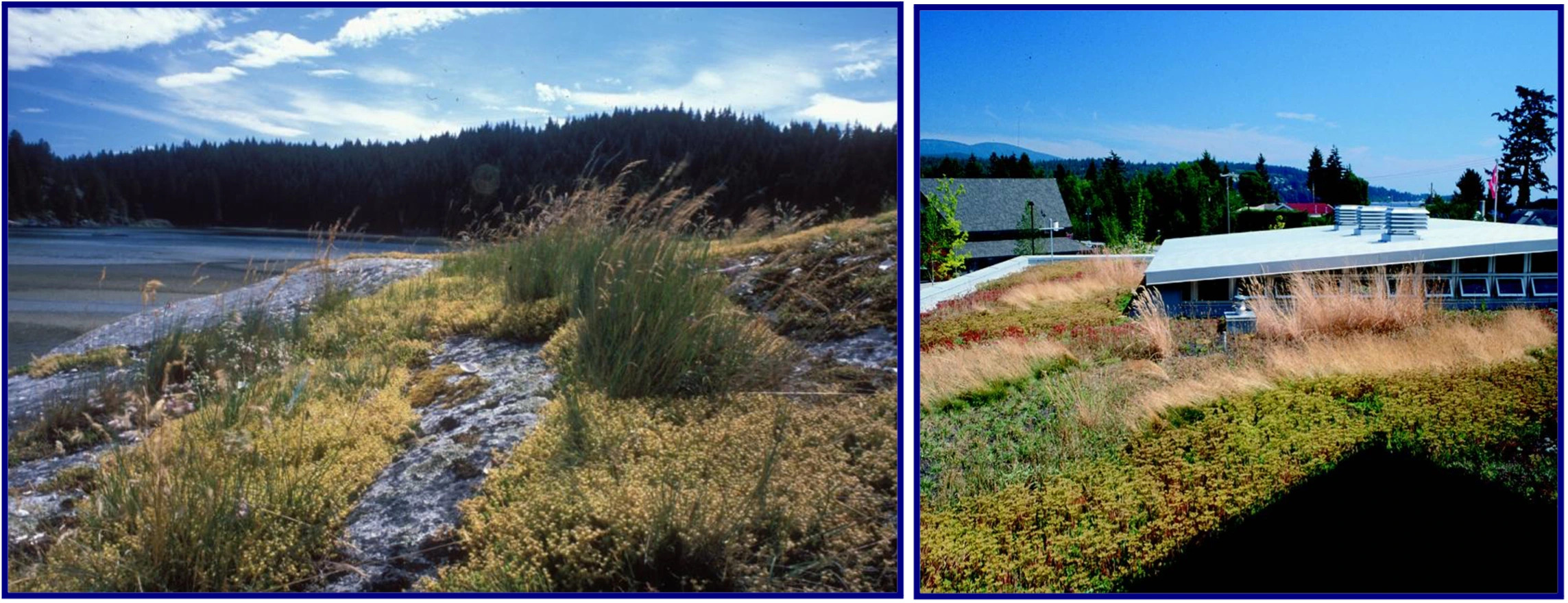
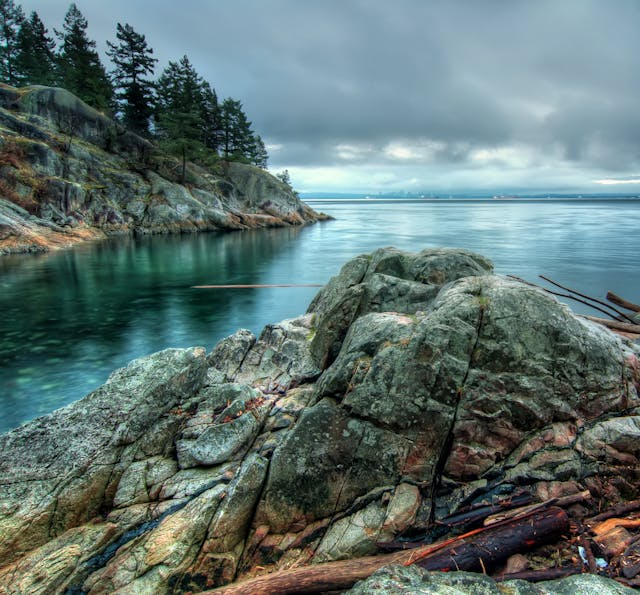
To avoid lock-up or failure, we decided to a build a prototype for a sloping green roof on top of my garage in Kitsilano. Upon returning to BC from an information-gathering tour of Germany, I endeavoured to source local materials to create a lightweight green roof growing medium. I climbed around the coastal bluffs at Whytecliff Park in West Vancouver, rich in species native to the Garry oak and associated ecosystems. Picking wildflowers was prohibited, however, I carefully gathered loose, crumbly soil samples from bare areas on the slopes and had them tested by a soil laboratory.
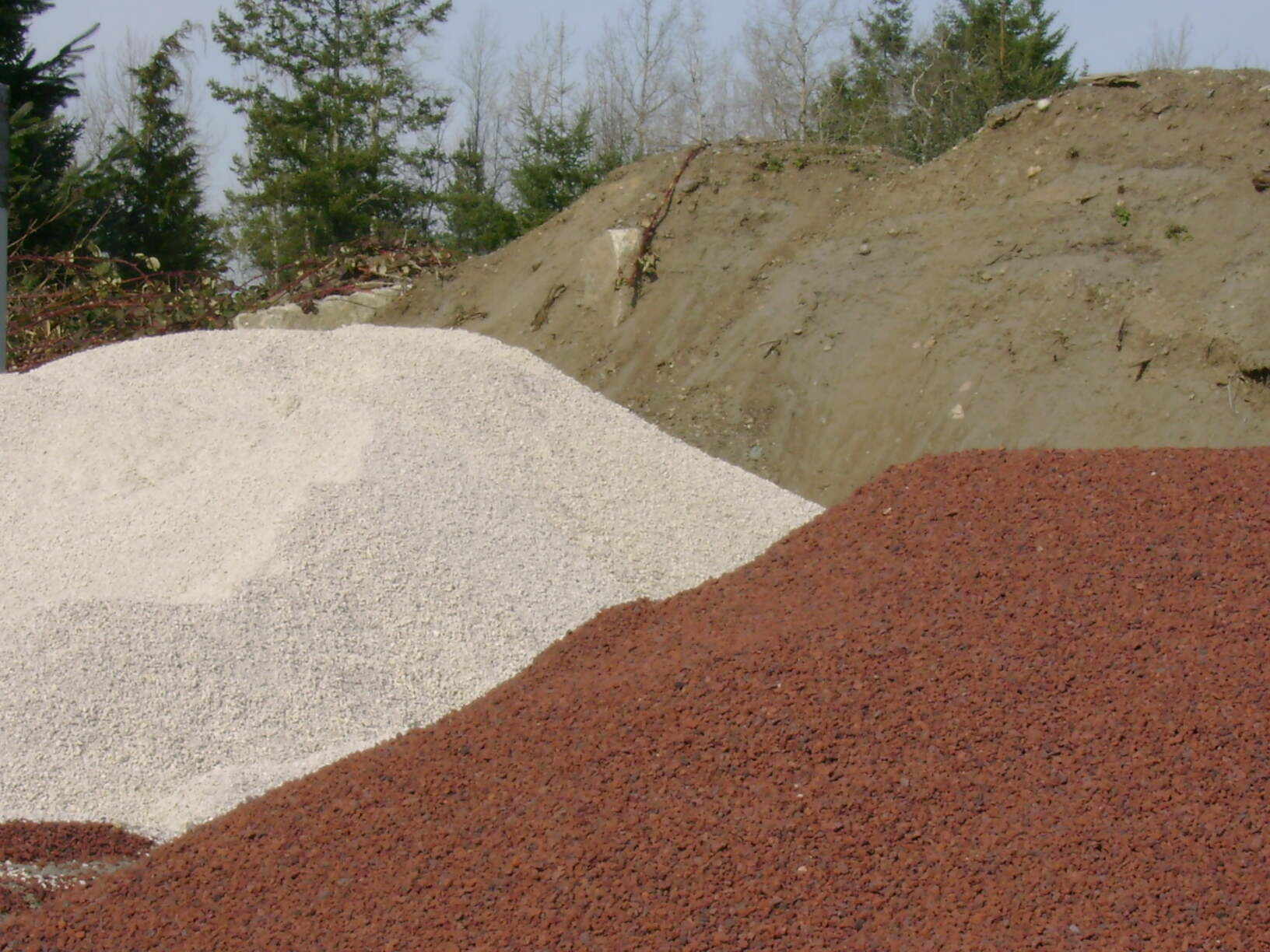
Part of our research involved sourcing local or recycled aggregate that would align with the requirements of the FLL Green Roof Guidelines. Appropriate, properly blended growing media must:
- protect the building envelope,
- be lightweight,
- retain moisture, and
- mitigate extremes in moisture and temperature.
I tried crushed clay brick, but the broken pieces were all re-used in the factory kilns. I also tried expanded clay in round pellets manufactured for hydroponics, but they rolled off the sloping roof. I then sourced black pumice from Quesnel, BC. The glass like volcanic rock warmed up early in the Spring for quick plant establishment but its dark colour stressed the vegetation in the hot summer (not cool). Subsequently, we formulated a blend of white pumice, red scoria and well composted organic matter (5 – 10%) and 90%+ gradated mineral substrate. This proved to be a very successful blend.
Next, for the garage prototype, I asked my carpenter to build a framework on a 4:1 pitch to act as shear barriers. These would also serve to separate the different blends of growing media and plants, like test plots. (He also added more structural wood inside the garage, to support the extra weight and to protect my wife’s Valiant Signet convertible.) The 2×4” cedar frames act like a saddle strapped over the peak of the roof without puncturing the water proofing. The west facing slope was covered by a single sheet of punched dimple drain mat with integrated filter fabric. The lightweight growing medium retained enough moisture with no supplemental irrigation except during establishment. (A green roof installed over duroid shingles is NOT recommended.)
We were on a tight budget ($1000), and we were fortunate to receive some donations of plant plugs and drain mat. We figured that the green roof would be a temporary installation.
After 2 years and minor plant replacement, the planting had thrived with no maintenance, no irrigation and no fertilization. Three species of sedums have dominated (S. album “Coral Carpet, S. oreganum and S. kamschaticum), spreading across the original frame. Self-seeded California poppies, miniature daffodil bulbs and a few volunteer grasses offer year-round interest. The east slope is mostly moss under the shade of a large wild cherry tree. Evergreen Clematis and Chocolate Vine have grown up and over the north façade on to the rooftop.
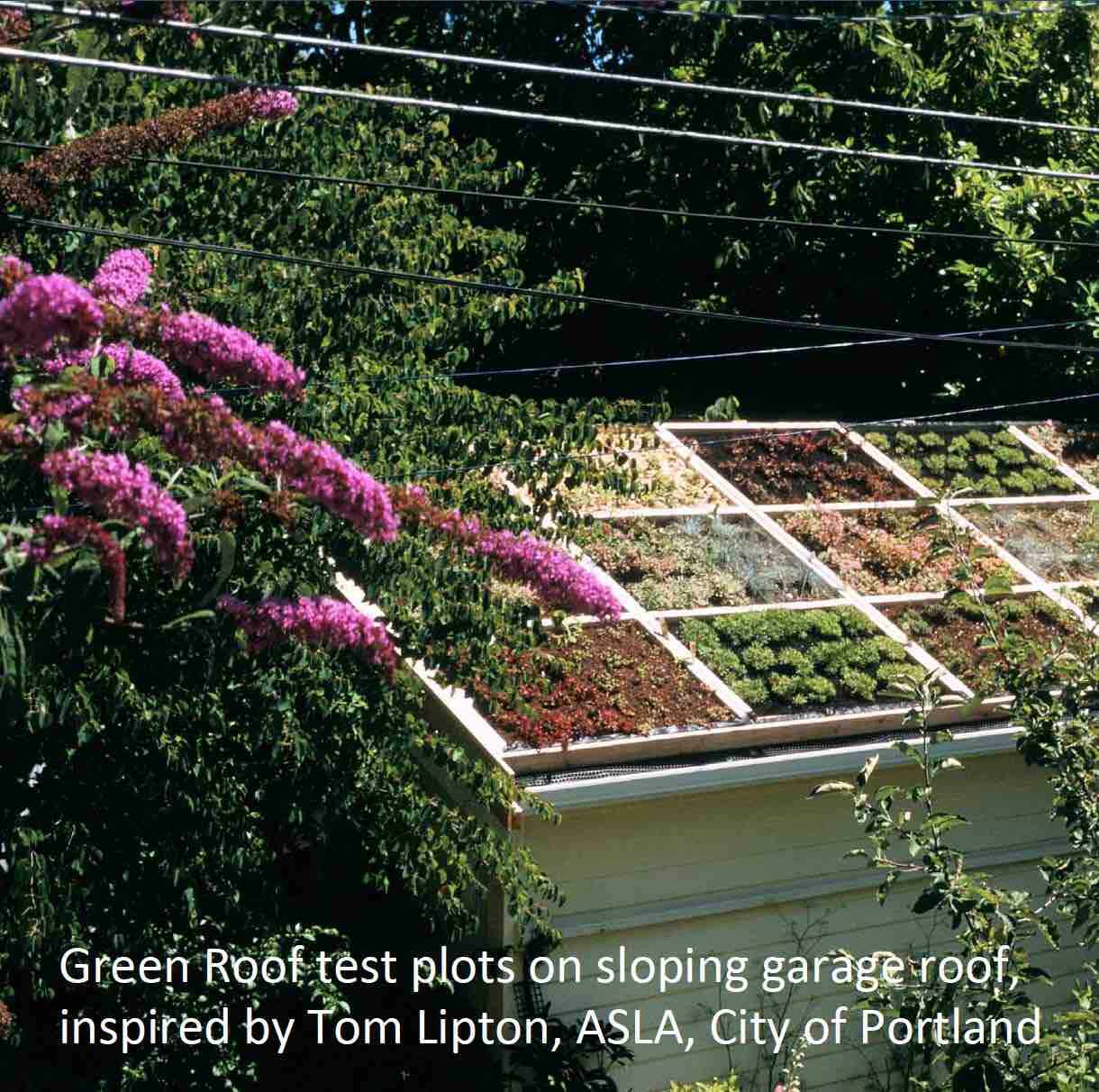
Now, after 22 years, the green roof on our garage remains a steady and consistent feature in our back garden. Our neighbours have the best view from their back porch. Maintenance is minimal to nil, partly because the growing media (composition and depth) maintain the vegetation, and likely also because we don’t irrigate.
Looking ahead
The future is hard to predict, and the same goes for our green roof garage. It’s possible my daughter would like to build a laneway house, or we might replace the garage with infill. In any case, we would salvage the green roof plants, which have been resilient over the decades. There is never a dull moment, whether watching hummingbirds, songbirds, squirrels and bees, or contemplating what the next generation of housing looks like in Vancouver. I’m grateful for the opportunity to design and build numerous green roofs and living walls in BC over the course of my career, and highly recommend pursuing your interests, whatever they may be!
Biography:
Randy Sharp is an award-winning landscape architect who has been based in Vancouver since 1977. In 1980, Randy established Sharp & Diamond Landscape Architecture Inc. Major achievements include the Vancouver International Airport (YVR), the Seymour Filtration Plant (Metro Vancouver), Broadway Tech Centre (Bentall Kennedy/Quad Real), the headquarters of Mountain Equipment Co-op (MEC) and the Delbrook Community Recreation Centre in North Vancouver. Randy continues to consult on living architecture and water sensitive projects, and is a founding board member of the Green Roof Infrastructure Network.
One Response
Thanx very much Randy. I’m glad to have been able to assist in your green journey. Even though I am also a landscape architect my approach was quite different than Randy. I had one question; would soil and plants on a roof manage the rain and reduce runoff. I placed a sheet of plastic over the existing bitumen sheet on my garage roof, then I shoveled up soil from ghe back yard, gathered various plants mostly sedums growing over sidewalks and I bought a few too. I also added some compost. The sook compost together was about 2 inches deep. Oh I also reinforced the garage structure to hold the weight. I started the project in late 1995 and completed it in early 1996. Although I had a singular interest at first within months I noticed the biodiversity and to my surprise after 2 years of monitoring the rain it worked for rain management. I took the data into the city of Portland engineers and thus began Portland research and recognition of what we began to call ecoroofs for stormwater management. So you might wonder about my garage. It was relocated to the front porch of my new house in SE Portland. When we sold the old house in 2014 the new owners kept the ecoroof. In 2018 they contacted me because they were going to build a granny flat in its place. I removed the plants, soil and waterproof membrane and reinstalled everything on my new porch roof, where it is today and this year celebrates its 30 year anniversary. Perhaps it is the first ecoroof ever salvaged and reinstalled. Happy Greening Randy!